Disclosure: Pleasure Proper is reader-supported. Some links on this page are affiliate links, which means we may earn a commission if you buy through them, at no extra cost to you.
Adults 18+ only. This article is general information, not medical or legal advice.
Naturism (often called nudism or nude recreation) is, at heart, a fairly ordinary pastime: people relaxing, swimming, hiking or playing volleyball without clothes. Its biggest organization in North America, the American Association for Nude Recreation (AANR), traces its roots to 1931 and says it has served more than 213,000 people, with over 180 nudist resorts and affiliates (AANR).
If you’re curious, the good news is that the “rules” are mostly good manners plus good sunscreen. This guide covers both, along with what to pack.
1. Understand what naturism is (and isn’t)

Naturist organizations are clear that social nudity is non-sexual. AANR’s beach guidance asks visitors to “avoid any hint of sexuality in clothing-optional areas,” noting that complaints about public sex have caused sites to close (AANR). Bare Necessities, the long-running nude cruise operator, describes its cruises as “strictly non-sexual” and says violations can mean being put off the ship at the next port without a refund (Bare Necessities FAQ).
People give many reasons for trying it. AANR lists relaxation, stress relief and a more positive body image among them (AANR FAQ). Those are members’ reported motivations, not guaranteed outcomes, and that’s fine. You don’t need a philosophy to enjoy a quiet swim.
2. Start somewhere designed for beginners
The easiest first step is an established, member-run club or resort rather than a random beach.
- Clubs and resorts. AANR says nudity is legal at its clubs and resorts, and it runs a club locator for finding one near you (AANR FAQ). Bare Necessities likewise suggests a first-timer visit a local club before booking a cruise (Bare Necessities FAQ).
- Clothing-optional beaches. AANR notes that the law “can be a little fuzzier” at beaches and public recreation areas (AANR FAQ), and that some accepted clothing-optional beaches are “not strictly legal” (AANR). Rules vary by place, so check the official rules for any specific beach before you go. This is general information, not legal advice.
- Membership. AANR says members receive 20% or more off regular rates at participating clubs (AANR FAQ).
3. Etiquette: the short list
Most naturist etiquette is simple courtesy. From AANR’s published guidance (AANR):
- Leave the camera at home, including your phone’s. If you must take a picture, keep it to your own party and never include anyone in the background without their verbal permission.
- Respect privacy. Friendly is good, but if someone doesn’t respond, let them be. “No” means no.
- Give people space. Don’t set up right beside someone when there’s room elsewhere.
- Dress when leaving the clothing-optional area, including in parking lots and on neighboring “textile” (clothed) beaches.
- Speak up politely if someone is breaking the accepted standards.
You don’t have to be nude every minute. AANR says many people dress when it gets cooler, for meals or for some sports, and some clubs require clothing in dining areas, dance halls and health clubs (AANR FAQ). On Bare Necessities cruises, for example, clothing is required in the dining rooms and on board whenever the ship is docked in port (Bare Necessities FAQ).
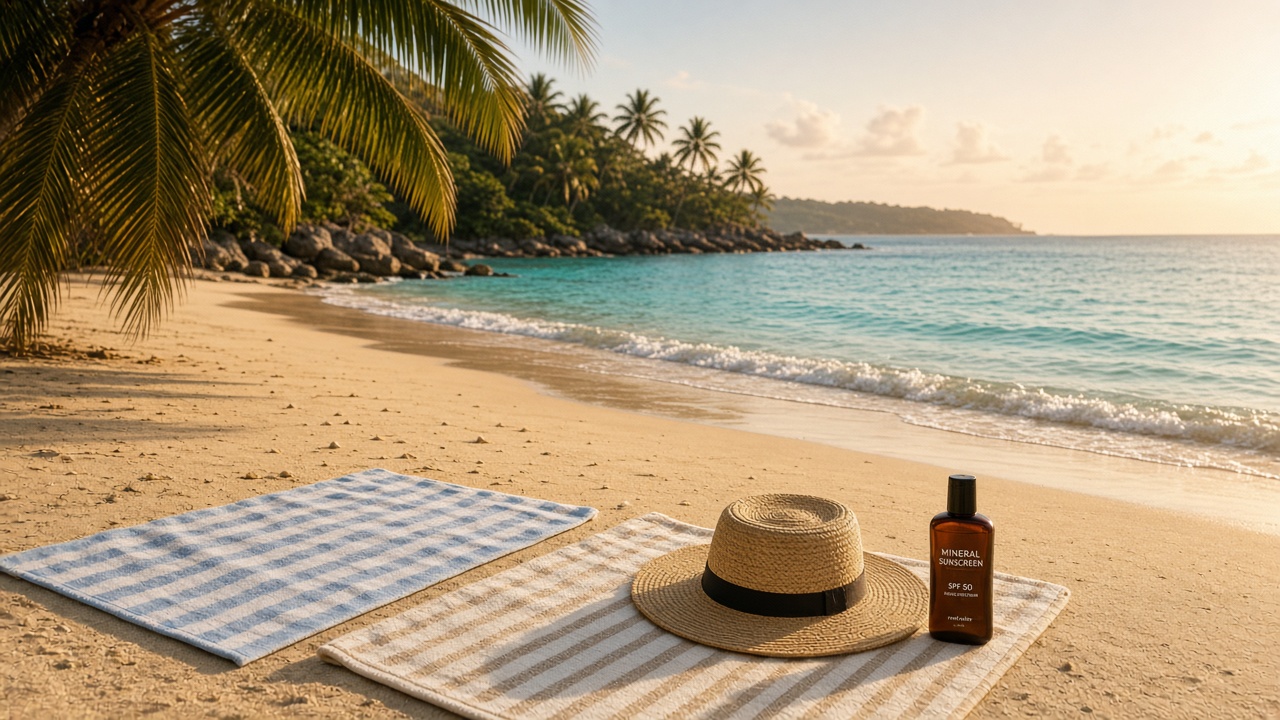
Bring a towel to sit on. Many clubs ask guests to sit on their own towel as a hygiene courtesy. House rules differ, so read the club’s rules before your visit.
4. Sun care: the part beginners underestimate
When skin that’s normally covered sees the sun for the first time, it burns easily. Dermatologists’ standard advice applies, just to more of you:
- Use enough. The American Academy of Dermatology (AAD) says most adults need about 1 ounce, roughly a shot glass, to cover skin not covered by clothing (AAD). With no clothing, plan for more.
- Apply before you go out. The AAD says sunscreen takes about 15 minutes to absorb and protect you (AAD).
- Reapply every two hours, and right after swimming or sweating (AAD).
- Go high and water-resistant for long days. The Skin Cancer Foundation recommends SPF 50 or higher, water-resistant sunscreen if you spend a lot of time outdoors where the sun is strongest (Skin Cancer Foundation).
- Know what “water resistant” means. It’s tested for up to 40 minutes of swimming; “very water resistant” for up to 80 minutes. No sunscreen is waterproof (Skin Cancer Foundation).
- Don’t forget your lips. The AAD recommends a lip balm with SPF 30 or more (AAD).
Mineral or chemical? Mineral sunscreens use zinc oxide or titanium dioxide, which stay on top of the skin (Skin Cancer Foundation). Many people with sensitive skin prefer them, but both types work when used properly. The best sunscreen is the one you’ll reapply.
Shade helps too: a beach umbrella or pop-up shade lets you take breaks without dressing.
5. What to pack
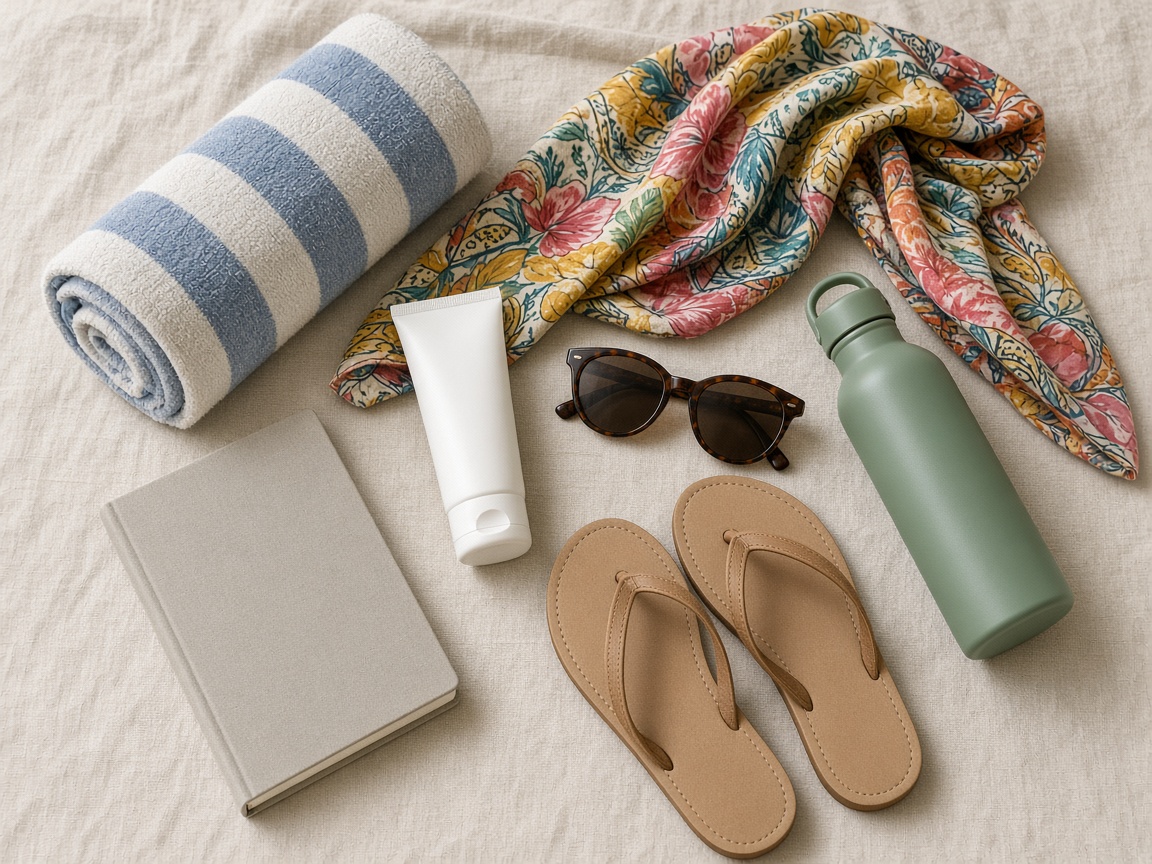
A simple, proven list for a day at a club or clothing-optional beach:
- Two towels, one to sit on and one for drying off.
- Sunscreen and SPF lip balm (see above).
- A sarong, robe or cover-up for walking to and from the car, meals and cool evenings.
- Sandals or water shoes for hot sand, decks and trails.
- A reusable water bottle and snacks.
- A tote or dry bag for keys, ID and your phone (kept put away).
- Reading material, cards or a book, since a phone in hand can make people uneasy.
- Proof of membership or a reservation, if the club requires one.
6. Naturism at home
Plenty of naturists simply enjoy their own backyard or pool; AANR notes members do exactly that (AANR). If you do, be a good neighbor: local laws on visibility from the street or neighboring properties vary, so check your local rules before you assume a yard is private.
Privacy upgrades that help:
- Backyard privacy screens or fence panels
- Frosted or one-way privacy window film
- An outdoor or infrared home sauna
7. Traveling as a naturist
Once you’re comfortable, there are dedicated resorts and even full-ship charters. Bare Necessities, for example, runs an annual “Big Nude Boat” charter on a major cruise line (Bare Necessities). For resorts, booking sites list many clothing-optional properties; read each property’s policies carefully, since some are adults-only and some are family-friendly.
The bottom line
Your first visit is mostly about courtesy and sunscreen. Pick an established club, read its house rules, leave the camera in your bag, bring a towel and reapply every two hours. Everything else tends to fall into place.
Last reviewed for accuracy: November 4, 2026.