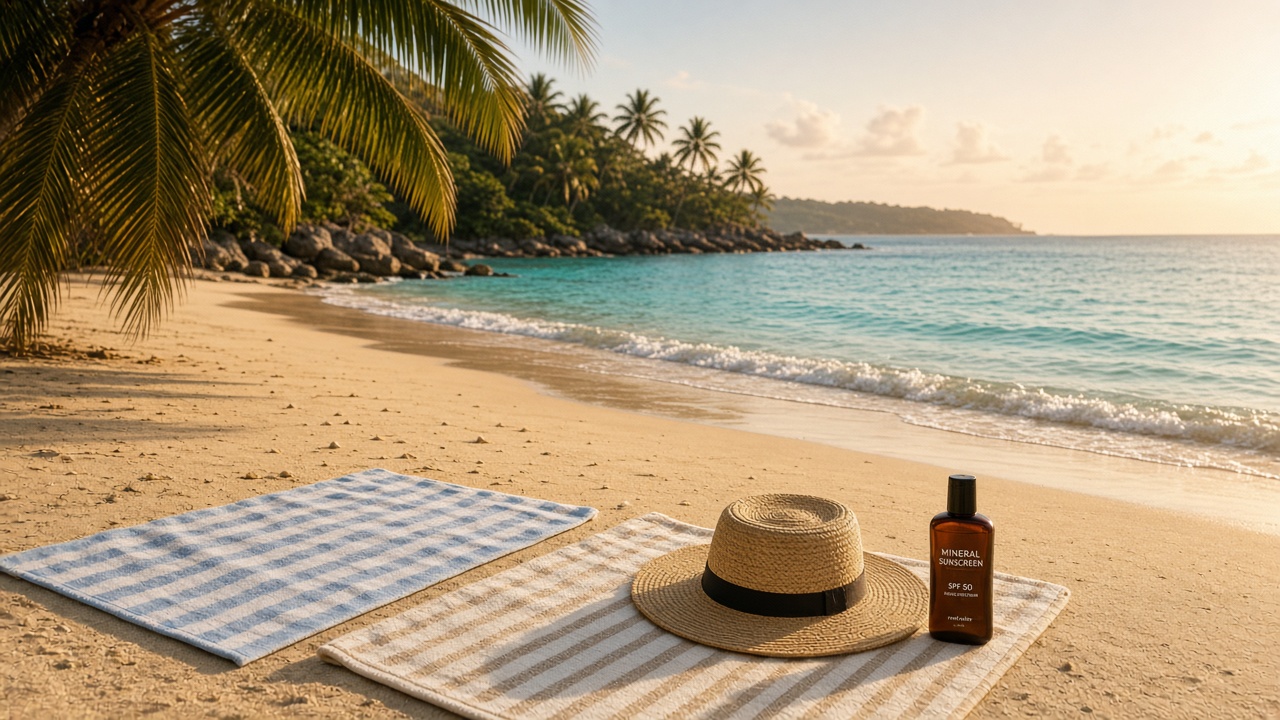
Category: Guides

  • A Practical Beginner’s Guide to Naturism: Etiquette, Sun Care and What to Pack

    A Practical Beginner’s Guide to Naturism: Etiquette, Sun Care and What to Pack

    Disclosure: Pleasure Proper is reader-supported. Some links on this page are affiliate links, which means we may earn a commission if you buy through them, at no extra cost to you.

    Adults 18+ only. This article is general information, not medical or legal advice.

    Naturism (often called nudism or nude recreation) is, at heart, a fairly ordinary pastime: people relaxing, swimming, hiking or playing volleyball without clothes. Its biggest organization in North America, the American Association for Nude Recreation (AANR), traces its roots to 1931 and says it has served more than 213,000 people, with over 180 nudist resorts and affiliates (AANR).

    If you’re curious, the good news is that the “rules” are mostly good manners plus good sunscreen. This guide covers both, along with what to pack.

    1. Understand what naturism is (and isn’t)

    Private resort pool with tall hedges, loungers and cabanas

    Naturist organizations are clear that social nudity is non-sexual. AANR’s beach guidance asks visitors to “avoid any hint of sexuality in clothing-optional areas,” noting that complaints about public sex have caused sites to close (AANR). Bare Necessities, the long-running nude cruise operator, describes its cruises as “strictly non-sexual” and says violations can mean being put off the ship at the next port without a refund (Bare Necessities FAQ).

    People give many reasons for trying it. AANR lists relaxation, stress relief and a more positive body image among them (AANR FAQ). Those are members’ reported motivations, not guaranteed outcomes, and that’s fine. You don’t need a philosophy to enjoy a quiet swim.

    2. Start somewhere designed for beginners

    The easiest first step is an established, member-run club or resort rather than a random beach.

    • Clubs and resorts. AANR says nudity is legal at its clubs and resorts, and it runs a club locator for finding one near you (AANR FAQ). Bare Necessities likewise suggests a first-timer visit a local club before booking a cruise (Bare Necessities FAQ).
    • Clothing-optional beaches. AANR notes that the law “can be a little fuzzier” at beaches and public recreation areas (AANR FAQ), and that some accepted clothing-optional beaches are “not strictly legal” (AANR). Rules vary by place, so check the official rules for any specific beach before you go. This is general information, not legal advice.
    • Membership. AANR says members receive 20% or more off regular rates at participating clubs (AANR FAQ).

    3. Etiquette: the short list

    Most naturist etiquette is simple courtesy. From AANR’s published guidance (AANR):

    • Leave the camera at home, including your phone’s. If you must take a picture, keep it to your own party and never include anyone in the background without their verbal permission.
    • Respect privacy. Friendly is good, but if someone doesn’t respond, let them be. “No” means no.
    • Give people space. Don’t set up right beside someone when there’s room elsewhere.
    • Dress when leaving the clothing-optional area, including in parking lots and on neighboring “textile” (clothed) beaches.
    • Speak up politely if someone is breaking the accepted standards.

    You don’t have to be nude every minute. AANR says many people dress when it gets cooler, for meals or for some sports, and some clubs require clothing in dining areas, dance halls and health clubs (AANR FAQ). On Bare Necessities cruises, for example, clothing is required in the dining rooms and on board whenever the ship is docked in port (Bare Necessities FAQ).

    Bring a towel to sit on. Many clubs ask guests to sit on their own towel as a hygiene courtesy. House rules differ, so read the club’s rules before your visit.

    4. Sun care: the part beginners underestimate

    When skin that’s normally covered sees the sun for the first time, it burns easily. Dermatologists’ standard advice applies, just to more of you:

    • Use enough. The American Academy of Dermatology (AAD) says most adults need about 1 ounce, roughly a shot glass, to cover skin not covered by clothing (AAD). With no clothing, plan for more.
    • Apply before you go out. The AAD says sunscreen takes about 15 minutes to absorb and protect you (AAD).
    • Reapply every two hours, and right after swimming or sweating (AAD).
    • Go high and water-resistant for long days. The Skin Cancer Foundation recommends SPF 50 or higher, water-resistant sunscreen if you spend a lot of time outdoors where the sun is strongest (Skin Cancer Foundation).
    • Know what “water resistant” means. It’s tested for up to 40 minutes of swimming; “very water resistant” for up to 80 minutes. No sunscreen is waterproof (Skin Cancer Foundation).
    • Don’t forget your lips. The AAD recommends a lip balm with SPF 30 or more (AAD).

    Mineral or chemical? Mineral sunscreens use zinc oxide or titanium dioxide, which stay on top of the skin (Skin Cancer Foundation). Many people with sensitive skin prefer them, but both types work when used properly. The best sunscreen is the one you’ll reapply.

    Shade helps too: a beach umbrella or pop-up shade lets you take breaks without dressing.
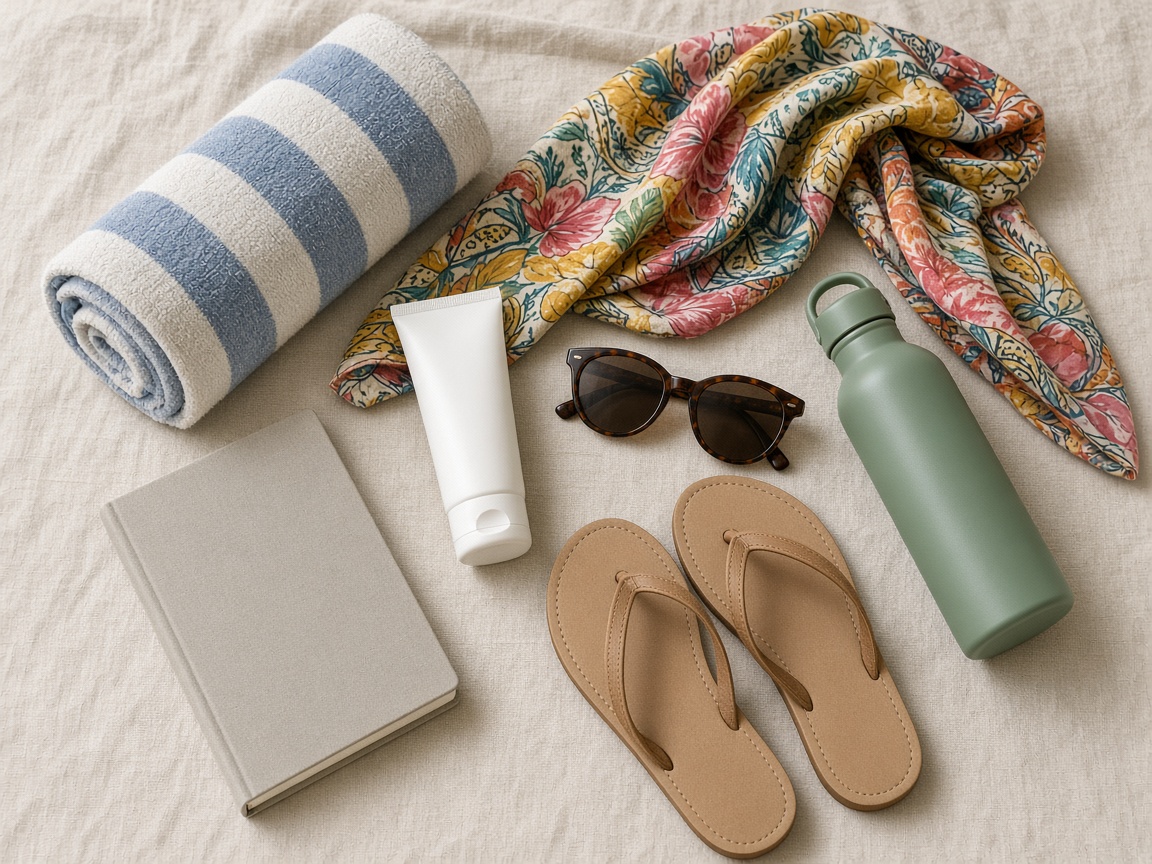
    Packing flat-lay with towel, sarong, sunscreen, sunglasses, water bottle and sandals

    5. What to pack

    A simple, proven list for a day at a club or clothing-optional beach:

    1. Two towels, one to sit on and one for drying off.
    2. Sunscreen and SPF lip balm (see above).
    3. A sarong, robe or cover-up for walking to and from the car, meals and cool evenings.
    4. Sandals or water shoes for hot sand, decks and trails.
    5. A reusable water bottle and snacks.
    6. A tote or dry bag for keys, ID and your phone (kept put away).
    7. Reading material, cards or a book, since a phone in hand can make people uneasy.
    8. Proof of membership or a reservation, if the club requires one.

    6. Naturism at home

    Plenty of naturists simply enjoy their own backyard or pool; AANR notes members do exactly that (AANR). If you do, be a good neighbor: local laws on visibility from the street or neighboring properties vary, so check your local rules before you assume a yard is private.

    Privacy upgrades that help:

    • Backyard privacy screens or fence panels
    • Frosted or one-way privacy window film
    • An outdoor or infrared home sauna

    7. Traveling as a naturist

    Once you’re comfortable, there are dedicated resorts and even full-ship charters. Bare Necessities, for example, runs an annual “Big Nude Boat” charter on a major cruise line (Bare Necessities). For resorts, booking sites list many clothing-optional properties; read each property’s policies carefully, since some are adults-only and some are family-friendly.

    The bottom line

    Your first visit is mostly about courtesy and sunscreen. Pick an established club, read its house rules, leave the camera in your bag, bring a towel and reapply every two hours. Everything else tends to fall into place.

    Last reviewed for accuracy: November 4, 2026.

  • How to Choose Your First Vibrator: A Polite, Practical Beginner’s Guide

    Adults 18+ only. Pleasure Proper may earn a commission when you buy through links on this site, at no extra cost to you. This content is general information, not medical advice. See our affiliate disclosure.

    Disclosure: Pleasure Proper is reader-supported. Some links on this page are affiliate links, which means we may earn a commission if you buy through them, at no extra cost to you. We only recommend product types and brands we believe are worth your consideration.

    Adults 18+ only. This article is general educational information, not medical advice.

    Buying a first vibrator can feel a little like walking into a very fancy restaurant without a menu translation. There are shapes you don’t recognize, words like “rumbly” and “buzzy,” and price tags that range from pocket change to luxury handbag. Allow us to be your maĆ®tre d’.

    The good news: there is no wrong reason to want one, and there is no single “right” product. There is only the right product for you, and finding it mostly comes down to asking yourself a handful of sensible questions. This guide walks through them, in order.

    1. First, a word on etiquette (with yourself)

    Proper etiquette begins with courtesy, and that includes courtesy toward your own curiosity. Wellness organizations and sexual-health educators widely treat vibrator use as an ordinary part of adult sexual health, not something to be embarrassed about. Planned Parenthood puts it plainly: it’s totally normal to use sex toys, and totally normal not to; it’s a personal decision (Planned Parenthood).

    So: no apologies needed. Let’s shop smart.

    2. Decide where you’d like it to be used

    The single biggest factor in choosing a first vibrator is where on the body you expect to use it. Broadly, beginner-friendly products fall into a few families:

    External (often called “clitoral” or “lay-on”) vibrators

    Small, rounded, palm-sized designs meant for external use. Many beginners start here because they are simple, unintimidating, and versatile.

    Bullet vibrators

    Compact, lipstick-sized cylinders. They’re affordable, discreet, and easy to travel with. Their trade-off is usually a smaller motor, so some people find them less powerful.

    Wand-style massagers

    Larger, with a round head on a handle. They tend to offer broad, strong vibration and double as genuine muscle massagers. Excellent for people who know they like intensity; potentially “too much” for others at first.

    Internal or dual-stimulation designs

    Shaped for internal use, sometimes with an external arm. These are more specific, so many educators suggest learning what you enjoy externally first before investing here.

    Air-pulse or suction-style devices

    Instead of traditional vibration, these use pulses of air around (not on) the external area. Some people love the sensation; others prefer classic vibration. Brands such as Womanizer specialize in this category.

    Polite suggestion: if you genuinely don’t know where to start, an external vibrator or small wand is the most flexible first purchase.

    3. Choose a body-safe material (this one is non-negotiable)

    What a product is made of matters more than how it looks. Non-porous materials such as body-safe silicone, glass, stainless steel, and ABS hard plastic can be cleaned thoroughly. Porous materials such as jelly rubber, PVC, and TPE/TPR have tiny surface pores that can hold onto bacteria and are harder to clean fully (QUIN sexual health guide).

    Researchers have also raised concerns about chemicals such as phthalates (softeners used in some plastics) found in some sex toys, and noted that the category is not well regulated (Sipe et al., 2023, PMC).

    What to look for on a product page:
    – “100% body-safe silicone” or “medical-grade silicone” (and ideally a reputable brand behind the claim)
    – “Phthalate-free” stated explicitly
    – Avoid vague words like “jelly,” “realistic skin,” or “rubber blend” on a first purchase

    For the long version, see our explainer: Body-Safe Materials, Explained (internal link).

    4. Rumbly vs. buzzy: understanding vibration

    This is the part product listings rarely explain well.

    • Buzzy vibrations are high-frequency and feel sharp or tingly, concentrated at the surface. Small motors (like many bullets) tend to feel buzzy.
    • Rumbly vibrations are lower-frequency and feel deeper. Larger motors and wands often feel rumblier.

    Neither is better. But if you have ever found an electric toothbrush-style buzz numbing or irritating, lean rumbly. Many retailers’ product descriptions or customer reviews mention which category a product falls into; it’s worth reading them.

    Intensity range matters too. A first vibrator with a wide range of settings, including a genuinely gentle low setting, lets you find your preference instead of guessing.

    5. Practical features worth checking

    Feature Why it matters What to look for
    Rechargeable No disposable batteries to buy USB or magnetic charging
    Waterproof rating Easier cleaning; bath-friendly “Waterproof” or an IPX7 rating on the maker’s page
    Noise level Privacy with roommates or family Retailer notes or reviews about “quiet” operation
    Controls Ease of use mid-moment Simple, few buttons, travel lock
    Warranty Signals maker confidence A clearly stated warranty on the maker’s site
    Size Comfort and discretion Start smaller if unsure

    Always rely on the manufacturer’s own page for specifics such as charge time, run time, and waterproof rating; specs vary by model and change between versions.

    6. Budget: what you’re actually paying for

    You do not need to spend luxury money on a first vibrator, but very low prices can be a red flag for questionable materials. As a rule of thumb, you are paying for:

    • Motor quality (strength, rumble, longevity)
    • Material certification (genuinely body-safe silicone costs more)
    • Battery and charging (rechargeable lithium batteries vs disposable)
    • Warranty and customer service

    A sensible approach: decide your ceiling, then filter by body-safe materials and a real warranty before looking at anything else. Favor retailers whose product pages state the material clearly; that takes some of the guesswork out.

    7. Where to buy (and why it matters)

    Buy from established sexual-wellness retailers or directly from well-known makers rather than from anonymous marketplace sellers. Benefits include:

    • Clear material and safety information
    • Discreet packaging and billing (check each retailer’s policy page)
    • Hygiene-aware return policies (most retailers do not accept returns on opened intimate products, so read the policy before you buy)
    • Genuine products rather than counterfeits

    Check warranty terms on the maker’s own site; We-Vibe, for example, states a 2-year guarantee on its toys (We-Vibe).

    8. Your first-use checklist

    1. Charge it fully before first use, following the included instructions.
    2. Wash it with warm water and mild, unscented soap, or a dedicated toy cleaner (see our cleaning guide).
    3. Pick a compatible lubricant. With silicone products, use water-based lube. Planned Parenthood advises against silicone lube on silicone toys (unless the toy is covered with a condom), because it can damage the toy (Planned Parenthood).
    4. Start on the lowest setting. You can always go up.
    5. Clean, dry, and store it properly afterward.

    9. When to talk to a clinician

    A vibrator is a wellness product, not a treatment. If you experience pain, bleeding, persistent irritation, numbness that doesn’t resolve, or changes in sexual function, please check in with a doctor, gynecologist, or sexual-health clinic. If you have a pacemaker or another implanted medical device, ask your clinician before using any vibrating product.

    FAQ

    What is the best type of vibrator for a total beginner?
    Many beginners start with an external vibrator or a small wand because they are versatile and simple. The “best” one is whichever suits where you want to use it and how intense you like sensation.

    Is silicone really better than jelly or rubber?
    Body-safe silicone is non-porous, so it can be cleaned thoroughly. Jelly and similar porous materials can harbor bacteria and may contain phthalates, so they’re generally not recommended for a first purchase.

    Are expensive vibrators worth it?
    Not necessarily, but very cheap products may cut corners on materials and motors. Prioritize body-safe material, rechargeability, and a warranty within your budget.

    How do I know if a vibrator will be quiet?
    Check the maker’s description and retailer reviews. Note that noise also depends on the setting and the surface it touches.

    Can I use any lube with my vibrator?
    Water-based lube is compatible with nearly all toy materials. Planned Parenthood says water-based lube is a safe bet with any toy, and advises against silicone lube on silicone toys unless the toy is covered with a condom.

    Sources

    • Planned Parenthood, Sex Toys: https://www.plannedparenthood.org/learn/sex-pleasure-and-sexual-dysfunction/sex-and-pleasure/sex-toys
    • QUIN, Sex Toys: Care, Cleaning and Safer Play: https://www.quin.org.au/sex/sex-toys-care-cleaning-and-safer-play
    • Bringing sex toys out of the dark: exploring unmitigated risks (PMC10034881): https://pmc.ncbi.nlm.nih.gov/articles/PMC10034881/
    • Cleveland Clinic, What Can You Use Instead of Lube?: https://health.clevelandclinic.org/what-can-i-use-instead-of-lube
    • FTC Endorsement Guides, 16 CFR Part 255: https://www.ecfr.gov/current/title-16/chapter-I/subchapter-B/part-255
  • Traveling Discreetly: How to Pack Intimate Wellness Products

    Adults 18+ only. Pleasure Proper may earn a commission when you buy through links on this site, at no extra cost to you. This content is general information, not medical advice. See our affiliate disclosure.

    Disclosure: Pleasure Proper is reader-supported. Some links on this page are affiliate links, which means we may earn a commission if you buy through them, at no extra cost to you.

    Adults 18+ only. This article is general educational information, not medical advice.

    A well-packed bag is a quiet bag. Here’s how to bring personal wellness items on a trip with minimal fuss, no buzzing suitcases, and no awkward moments at security.

    1. Can you fly with intimate products?

    In the US, personal items are generally allowed through security, though TSA officers make the final decision on any item. The practical questions are about liquids and batteries, covered below. If traveling internationally, check your destination country’s customs rules, since some countries restrict adult products.

    2. Liquids: lube, massage oil, and toy cleaner

    TSA’s liquids rule for carry-on bags limits liquids, gels, and aerosols to containers of 3.4 ounces (100 mL) or less, all fitting in one quart-sized bag (TSA). Larger bottles go in checked luggage.

    • Choose travel-size bottles or single-use packets of lubricant.
    • Use leak-proof travel bottles for oils.
    • Pack toy-cleaning wipes rather than liquids when space is tight.

    3. Batteries and rechargeable devices

    The FAA’s PackSafe guidance says spare (uninstalled) lithium batteries must go in carry-on baggage, not checked bags, and devices containing lithium batteries should be carried in carry-on; if one is checked, it must be completely powered off and protected from accidental activation or damage (FAA PackSafe; FAA, Portable electronic devices).

    Tips:
    – Carry rechargeable devices in your carry-on.
    – Pack the charging cable. Many devices use proprietary chargers.
    – Consider an alkaline-battery device for long trips and remove the batteries for transit.

    4. The travel lock: your best friend

    Many rechargeable devices include a travel lock, a button combination that prevents accidental activation. Check your maker’s manual. If yours has none:

    • Remove the batteries, or
    • Fully discharge it before packing, or
    • Pack it in a hard case that keeps buttons from being pressed.

    5. Discreet packing

    • A dedicated pouch or zip case keeps items clean, separated, and private.
    • A lockable toiletry bag adds privacy in shared accommodations.
    • Pack near the top of carry-on bags so, if an officer needs to inspect, it’s quick and simple.

    If a bag is inspected, a calm “it’s a personal massager” is all the etiquette required. Officers see everything.

    6. Travel-friendly product types

    • Compact or bullet vibrators with travel locks (see our beginner’s guide).
    • Waterproof designs that clean easily in a hotel sink.
    • Single-use lube packets for weekend trips.
    • Silicone over porous materials, since they’re easier to clean on the road (see our materials explainer).

    7. Hygiene on the road

    • Clean items before packing and after use (see our cleaning guide).
    • Dry thoroughly before re-packing to avoid moisture and mold.
    • Bring condoms if you’ll be sharing products or for safer sex.

    8. International travel note

    Laws on adult products vary widely by country. Before traveling, check official government or embassy guidance for your destination, and if in doubt, leave it at home or buy locally where legal.

    A packing checklist

    • [ ] Device cleaned, fully dry, and travel lock engaged (or batteries removed)
    • [ ] Device in carry-on if it contains a lithium battery
    • [ ] Charging cable packed
    • [ ] Lubricant in a container of 3.4 oz (100 mL) or less, inside the quart-sized liquids bag
    • [ ] Toy-cleaning wipes or a small travel cleaner
    • [ ] A dedicated pouch or lockable case
    • [ ] Condoms, if relevant
    • [ ] Destination laws checked for international trips

    Road trips, trains, and hotels

    • Road trips: don’t leave rechargeable devices in a hot car; heat can damage batteries and materials.
    • Trains and buses: the same discreet pouch works; keep it in your personal bag.
    • Hotels and shared rentals: a lockable bag keeps things private from housekeeping and roommates. Clean items in the sink, dry them on a clean towel, and pack them away.
    • Staying with family or friends: discretion is good manners. A lockable toiletry bag avoids awkward moments.

    Common travel mistakes

    • Forgetting the charger for a device with a proprietary cable.
    • Packing a full-size bottle of lube in a carry-on.
    • Putting spare lithium batteries in checked luggage, which the FAA says belong in carry-on (FAA PackSafe).
    • Skipping the travel lock, and being greeted by a humming suitcase.
    • Re-packing items while still damp.

    If your bag is searched

    Stay calm and polite. Officers handle personal items routinely. If a pat-down is needed, TSA says you may request private screening with a companion of your choice (TSA), and keeping items in a neat, separate pouch makes any inspection quick.

    Buying at your destination

    For long trips, or where carrying products is impractical, buying locally from a reputable retailer, where legal, can be simpler than packing.

    FAQ

    Can I bring a vibrator in my carry-on?
    Generally yes in the US; TSA officers make the final call. Rechargeable devices with lithium batteries are best kept in carry-on.

    How much lube can I bring on a plane?
    Containers of 3.4 oz (100 mL) or less, in your quart-sized liquids bag, for carry-on.

    What is a travel lock?
    A setting that prevents a device from switching on accidentally. Check your manual for the button combination.

    Will TSA open my bag?
    Possibly. A neat pouch near the top makes any inspection quick and discreet.

    Sources

    • TSA, Liquids Rule: https://www.tsa.gov/travel/security-screening/liquids-rule
    • FAA, PackSafe: Lithium Batteries: https://www.faa.gov/hazmat/packsafe/lithium-batteries
    • FAA, PackSafe: Portable Electronic Devices Containing Batteries: https://www.faa.gov/hazmat/packsafe/portable-electronic-devices-with-batteries
    • TSA, Security Screening: https://www.tsa.gov/travel/security-screening
    • QUIN, Sex Toys: Care, Cleaning and Safer Play: https://www.quin.org.au/sex/sex-toys-care-cleaning-and-safer-play